
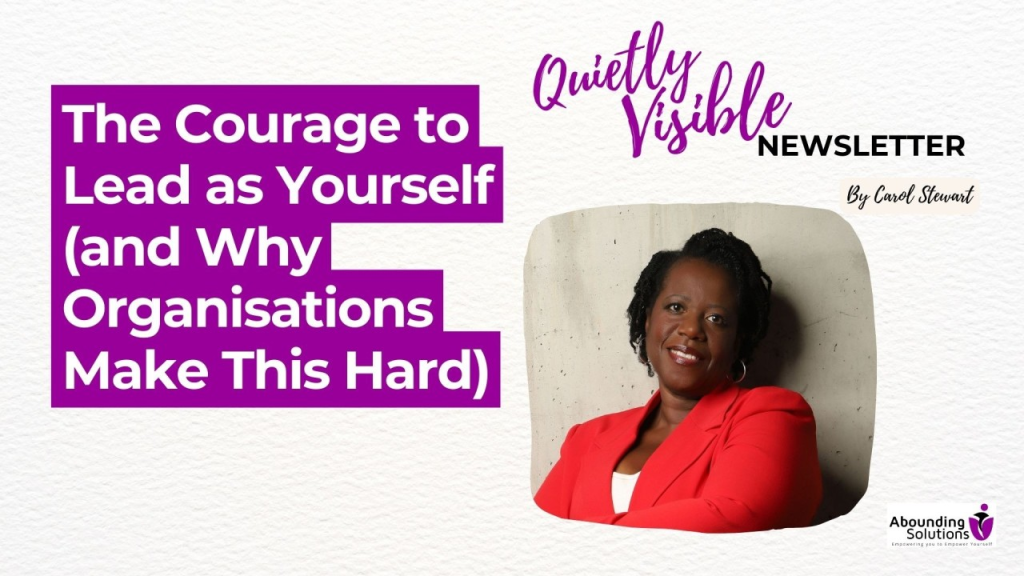
At the end of many coaching assignments, clients tell me they now have the confidence to lead as themselves — without trying to be someone they are not in order to get ahead or be taken seriously as a leader. They reach a point where they recognise they are good enough, and feel comfortable and confident being their authentic selves.
The culture and environment play a big role in making this hard
There are many factors that contribute to leaders not being able to be their authentic selves. The culture and environment of the organisation can play a significant role.
This is particularly so where someone is different to the dominant group and has a history of doubting themselves or a lack of self-belief. Their difference can mean they compare themselves to their colleagues and put themselves down in the process.
If the culture of the organisation has a fixed view of what leadership should look like, and does not allow for what falls outside the ‘norm’, those who don’t fit that norm can struggle. They may put on a persona and behave in ways that do not align with who they are. Over time this chips away at their self-belief and self-confidence — and it is stressful.
This is especially true for quieter leaders and introverted women who have often been told, implicitly or explicitly, that leadership looks like something other than who they are.
You are naturally more confident and courageous as your authentic self
Great leaders come in many different forms. When a person can be their authentic self, they are naturally more confident and courageous.
We all have a natural default way of being and a preference for how we show up. That default may serve us at times and at others it may not. There are many factors that shape our default, stemming from our early life experiences.
For some leaders, those early experiences have led to insecurities that show up in their thinking and behaviours, keeping them from being the confident, courageous, authentic leaders they are capable of being.
This puts them at a disadvantage. Particularly in environments that are not psychologically safe, where they are different, and where they do not feel like they belong. Many at the echelons of organisations are unaware of the psychological barriers and challenges their leaders experience, which prevent them from being their best selves.
People, performance, and profits reap the benefits
All leaders need to be able to flex their style and to have an awareness of when a different approach is needed. Coming at this from a place of authenticity and courage makes it easier to do so.
Given that we perform better when we are our best possible selves, organisations would do well to create cultures that allow for this. Not only will their people reap the benefits, but also performance and, ultimately, profits.
Those who face these challenges also need to take personal responsibility. They need to ask for what they need to support their development. And if their employer does not provide this support, to pursue it for themselves.
As you go through 2026, what needs to happen for you to have the courage to lead as yourself?
In the latest Quietly Visible Podcast episode, I’m joined by Sharon D. Brown — self-care strategist, licensed mental health professional, and founder of Self Care U Academy. We talk about why self-care isn’t a luxury but essential for sustainable leadership, especially for introverted women navigating demanding roles.
Sharon reframes rituals as supportive anchors that protect wellbeing, regulate the nervous system, and prevent burnout long before crisis hits — helping leaders stay grounded, resilient, and authentic.
A valuable listen for introverted women leaders who want to protect their energy, lead with intention, and build success without sacrificing their wellbeing. Listen on Spotify or Apple Podcast, or watch on YouTube here.