
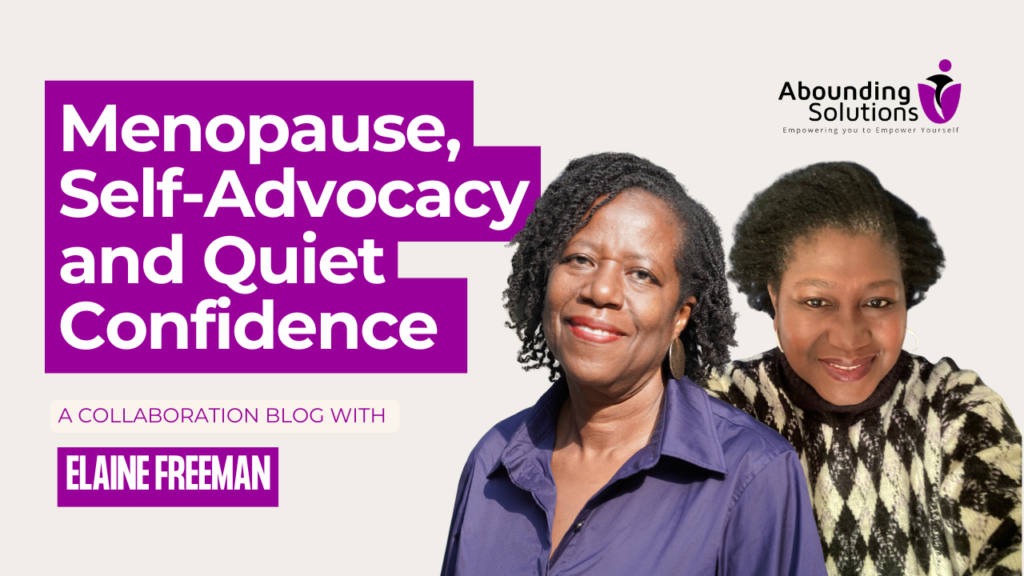
What menopause can teach us about self-advocacy, confidence and being quietly visible
After a recent conversation on the Quietly Visible podcast with Elaine Sinclair-Freeman, I found myself reflecting on how much menopause can affect how women see themselves, how they lead, and how they advocate for the support they need.
Although awareness of menopause has increased in recent years, many women still find themselves navigating symptoms, uncertainty and workplace expectations without the level of understanding or support they need.
For senior women and introverted women leaders, this can have a particular impact. When you are already used to carrying responsibility, thinking deeply, preparing carefully and holding yourself to high standards, it can be easy to explain away changes in energy, confidence, memory or mood as something you simply need to push through.
Menopause Is Not Just a Physical Transition
Menopause is often spoken about in relation to hot flushes, night sweats and changes to periods. These are important, but they are not the whole picture. For many women, menopause and perimenopause can also affect sleep, concentration, memory, mood, anxiety levels, motivation and confidence.
Brain fog, for example, can make a capable woman question her competence. Anxiety can appear in someone who has not previously experienced it in that way. Low mood can be misread as a personal failing rather than a signal that something deeper may need attention.
When these symptoms are not understood, women may start to question themselves. They may wonder why they are finding certain situations harder than before, why their confidence has dipped, or why they no longer feel quite like themselves.
That questioning can be particularly difficult for women who are used to being dependable, competent and composed.
The Quiet Power of Self-Advocacy
One of the strongest themes from my conversation with Elaine was the importance of self-advocacy. When something does not feel right, it matters that women feel able to ask questions, seek information and keep going until they feel properly heard.
Self-advocacy is not about being difficult, demanding or confrontational. It is about recognising that your experience is valid and that you are entitled to support, information and appropriate care.
- What are you noticing in your body, energy, mood or thinking that you have been dismissing?
- Where might you need to ask a different question?
- Who could help you feel more informed, supported and less alone?
Menopause, Leadership and the Workplace
Menopause can affect how women experience work. Concentration, memory, sleep disruption, fatigue, anxiety and changes in mood can all affect confidence and performance, especially in environments that are fast paced, highly target driven or low in psychological safety.
For organisations, it is not enough to have a policy hidden away somewhere. Women need cultures where they can speak openly, ask for adjustments where appropriate, and be met with understanding rather than judgement.
This matters because when women do not feel supported, they may withdraw, stop putting themselves forward, or leave roles in which they still have so much to contribute.
Menopause support is therefore not just a health and wellbeing issue. It is also a leadership, inclusion and retention issue.
Confidence Can Be Affected When You Do Not Understand What Is Happening
Confidence is not formed in isolation. It is shaped by our experiences, our environment, the messages we receive and the support we have around us.
When a woman is experiencing symptoms she does not fully understand, it can be easy for self-doubt to creep in. She may start asking herself:
- Choosing rest without guilt.
- Asking for support without apology.
- Reconnecting with what brings you joy.
- Listening to your body rather than overriding it.
- Allowing yourself to take up space in a way that feels authentic.
For introverted women leaders, the impact can be compounded by existing pressures to speak up, be visible, manage energy carefully and navigate environments where extraversion is often favoured. Quiet visibility becomes harder when you are questioning your capacity, your clarity or your confidence.
What Self-Advocacy Can Look Like
Self-advocacy does not always begin with a big, bold declaration. It often begins quietly, with noticing, naming and taking one next step.
That might mean tracking symptoms, booking an appointment, asking for a referral, speaking to someone you trust, requesting workplace adjustments, or doing your own research so that you can make informed decisions.
It can also mean challenging the belief that you should simply cope. Coping is not the same as being supported. Pushing through is not the same as thriving.
A Coaching Reflection
If you are navigating menopause, a health transition, a confidence dip, or simply a season where you no longer feel quite like yourself, consider these questions:
- What have I been tolerating that now needs my attention?
- Where am I waiting for permission to ask for support?
- What would self-advocacy look like for me in this season?
- How can I honour my energy while still allowing myself to be visible?
- What part of me is ready to be reclaimed?
Closing Thoughts
Elaine’s experience is a reminder that menopause should not be endured in silence. It is possible to seek support, understand yourself more fully, and move into the next chapter with greater clarity and confidence.
Connect with Elaine
Elaine Sinclair-Freeman has a background in social care and NHS healthcare, and has spent much of her career supporting and advocating for others. When her own menopause journey began at the age of 50, she had to learn to advocate for herself and seek the support she needed. Now 58 and post-menopausal, Elaine uses her experience to help break the stigma around menopause, share honest conversations, and remind others that they do not have to suffer in silence.
Elaine hosts the online community Pushing Through Menopause, where she shares her personal journey, practical reflections and encouragement for others navigating menopause and life beyond it.
Follow Elaine: @pushingthroughmenopause
Watch Quietly Visible Podcast Episode with Elaine here