
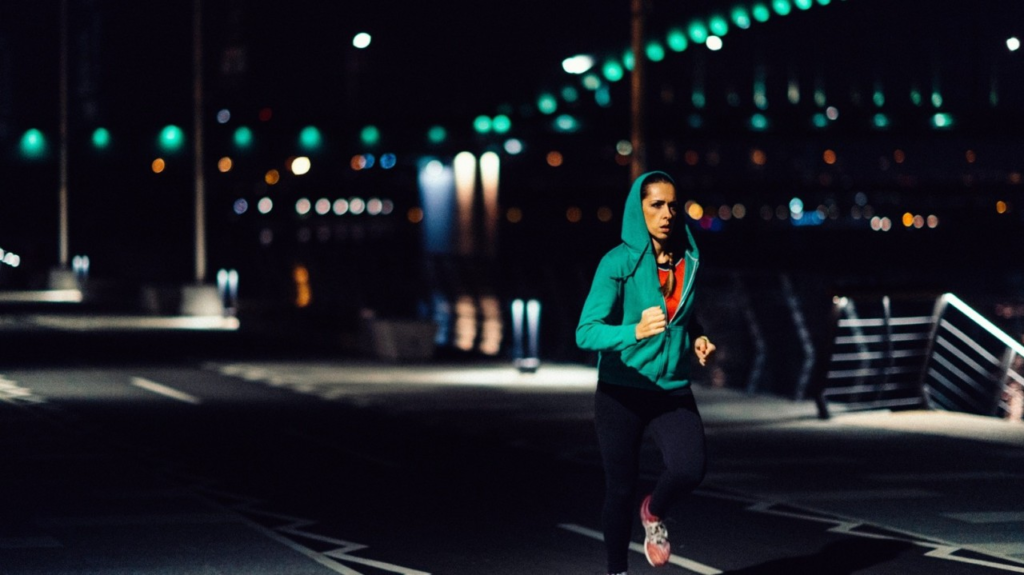
Illustrative image. Not from the Nike After Dark Tour.
Last Saturday, Nike held its After Dark Tour 10K in London, with around 5,000 runners taking part in an evening event that included running along the runway at London City Airport.
It was an impressive event, bringing women together to celebrate their participation in sport. But it got me thinking about something much wider.
Many women have concerns about their personal safety when running after dark and the Nike After Dark Tour would be a great way to increase awareness of this. But Nike describes the event as a celebration of women who run and an invitation for women to reclaim the night.
Reclaiming the night from what?
That got me thinking. Reclaiming the night from what? And what needs to change for women to feel safe running after dark, without having to participate in an organised event?
There is a difference between creating an experience where women feel empowered and addressing the circumstances that make such an experience necessary.
When I deliver my allyship training, I go beyond what is traditionally covered in allyship programmes. We explore the psychological impact of power, privilege, internalised oppression and other factors that create advantages for some and disadvantages for others.
One of the things I often do is ask participants to raise their hands if, after a night out with friends, they tell each other to message when they get home.
Invariably, all the women raise their hands, and the men don't.
Often, the men are surprised.
It is something many of them have never had to think about. They have not experienced the same concerns about their personal safety.
That is one of the ways privilege operates. We can be completely unaware of the disadvantages others experience because they are not part of our own everyday reality.
Women do this because they face a greater risk to their safety when travelling home alone at night.
Events like The After Dark Tour are great for creating publicity and creating hype around a brand, but what do they actually do to demolish the systemic and structural barriers in society that bring about inequality and inequity.
But are we really shifting the dial?
It reminds me of organisations holding lavish celebrations for International Women's Day or Black History Month. Canapés, wine, inspirational speakers and lots of publicity.
There is nothing wrong with celebrating these occasions. But what difference do these events make if, for the other 364 days of the year, the inequalities they are supposed to draw attention to remain largely unaddressed?
Nike has previously faced criticism over its treatment of women. In 2019, Olympic champion Allyson Felix spoke publicly about Nike's proposed reduction in her sponsorship payments following the birth of her daughter. Nike subsequently strengthened its maternity protections for sponsored athletes.
More recently, in July this year, a jury found that Nike had discriminated against a former female employee in relation to pay and promotion. Nike disagreed with the verdict.
So, whilst Nike has taken steps to address some of its past practices, questions remain about how its public commitment to women translates into the way women are treated.
It will be interesting to see what action follows this latest verdict.
Are we trying to fix people rather than the systems that disadvantage them?
Is the After Dark Tour just a grand gesture, or will it help to bring about change? Many DEI initiatives are often just a sticking plaster. They cover up and make things appear to be nice –– creating a temporary feel good factor, without dealing with the roots of systemic and structural inequalities.
Some of which are so entrenched they’ve become the accepted norm, so much so that we try to fix the affected individuals, rather than dismantling and rebuilding the structures that have created the challenges these individuals face.
As the divide between those who are advantaged and those who are disadvantaged widens, there is a danger that those with privilege become increasingly disconnected from the realities of those without it. They remain in their protective bubbles, oblivious to the inequalities others experience every day.
The advancement of AI runs the danger of perpetuating this at scale as individuals lose their critical thinking skills and judgement through its overuse –– but this is an article for another day.
It is easy to rest on your laurels when the problem isn’t on your doorstep. But if we are to see workplaces and societies that are just and fair, we all have a part to play in challenging the status quo.
We don’t need more grand gestures. We need meaningful action that brings about lasting change.